
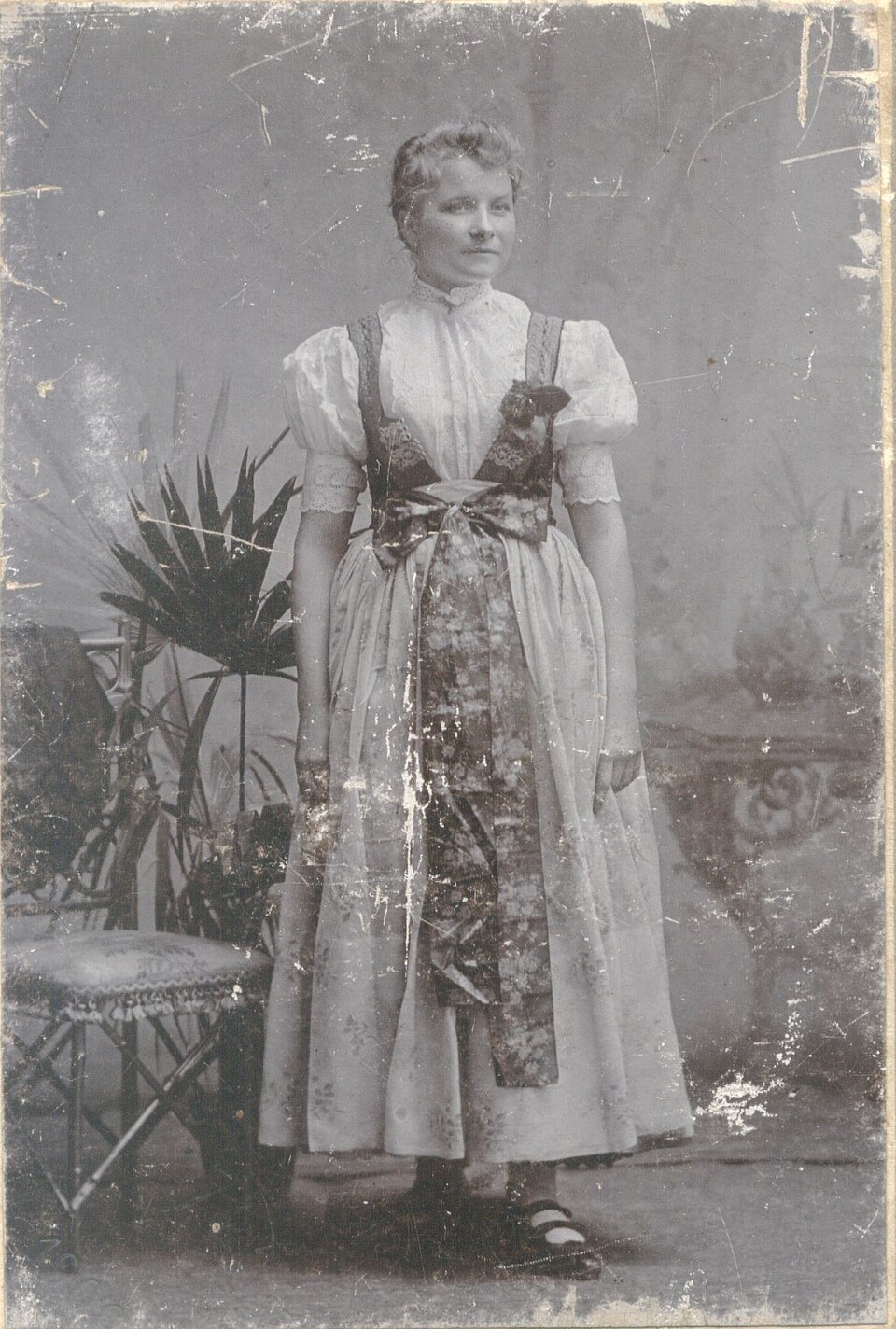
History, Language and Identity of Silesian People
This history shaped a regional identity with its own speech, customs and family names. In the 2021 Polish census about 596,000 people declared Silesian national or ethnic identity. Their ancestors appear in Catholic and Lutheran parish books, Prussian civil registers and Polish archives, often under names spelled in more than one language.
Silesia between Bohemia, Prussia and Poland
In the early Middle Ages Silesia was part of the Piast state. After 1138 the country was divided among the dynasty, and Silesia became a group of duchies ruled by separate Piast lines. During the fourteenth century these dukes became vassals of the Bohemian crown. The Treaty of Trenčín in 1335 confirmed that the Polish king gave up his claim to Silesia. In 1526 Bohemia, and Silesia with it, passed to the Habsburgs.
In 1740 Frederick II of Prussia invaded the province. The Treaty of Breslau in 1742 gave Prussia most of Silesia. The Habsburgs kept only Austrian Silesia, around Opava (Troppau) and Cieszyn (Teschen). For the next two centuries the larger part of the region was Prussian and, from 1871, German. A Slavic-speaking, mostly Catholic population lived in Upper Silesia, while Lower Silesia was mainly German-speaking.
| Period | Ruler of most of Silesia |
| 10th c. to 1335 | Piast dukes |
| 1335 to 1526 | Crown of Bohemia |
| 1526 to 1742 | Habsburg monarchy |
| 1742 to 1945 | Prussia and Germany |
| From 1945 | Poland (most of the region) |
Silesian Uprisings and the 1921 plebiscite
The Treaty of Versailles left the future of Upper Silesia to a plebiscite. Before the vote and after it, Polish supporters in the region rose in arms three times: in August 1919, in August 1920 and in May 1921. The plebiscite was held on 20 March 1921. About 707,000 votes were cast for Germany and about 479,000 for Poland, a split of roughly 60 to 40 percent. The results differed sharply from place to place: many rural districts in the east voted for Poland, while most towns voted for Germany.
The Third Silesian Uprising was followed by fighting at Góra Świętej Anny (St. Annaberg). In October 1921 the Conference of Ambassadors, acting on a League of Nations recommendation, divided the area. Poland received the smaller part of the territory, but it included a large share of the coal mines and steelworks around Katowice. From 1920 to 1939 the Polish Silesian Voivodeship was autonomous and had its own Silesian Parliament. In 1945 the whole region came under Polish rule. Most German inhabitants were expelled. Many native Upper Silesians stayed, and in later decades tens of thousands of them emigrated to West Germany.
The Silesian language debate
Silesian (ślōnskŏ gŏdka) is spoken mainly in Upper Silesia. In 2007 it received its own ISO 639-3 code, szl. Linguists disagree about how to classify it. Many Polish scholars describe it as a group of Polish dialects. Others, along with a large part of the speakers themselves, treat it as a separate West Slavic language, or as an ethnolect with its own vocabulary, sounds and a large number of German loanwords.
The main facts of the debate:
- In the 2011 census about 509,000 people declared that they used Silesian at home. In 2021 the figure was about 467,000.
- A standard spelling, the Ślabikŏrz alphabet, was proposed in 2010. It is used in books, a Wikipedia edition and regional media.
- Bills to grant Silesian the status of a regional language have been introduced in the Sejm several times. In 2024 both chambers of parliament passed such a bill, and President Andrzej Duda vetoed it in May 2024.
- Kashubian, by comparison, has had regional language status under Polish law since 2005.
The debate concerns more than linguistics, because it touches on how Silesians define themselves within Poland.
About silesian mining culture, traditions and food
From the nineteenth century Upper Silesia was one of Europe’s main coal and steel districts. Mining shaped daily life, housing and holidays. Workers lived in familoki, brick tenements built by mining companies. The Nikiszowiec estate in Katowice, built between 1908 and 1919 for the Giesche company, is one of the best-known examples. In 2017 the historic silver, lead and zinc mine in Tarnowskie Góry was added to the UNESCO World Heritage List.
Customs that are still observed today:
- Barbórka, 4 December, the feast of St. Barbara, patron saint of miners. Miners attend Mass, march in parade uniforms and hold formal gatherings.
- The miner’s parade uniform, a black jacket with a shako topped by a plume. The colour of the plume shows the wearer’s rank.
- Sunday dinner, traditionally beef roulade (rolada) with Silesian dumplings (kluski śląskie) and braised red cabbage.
- Kołocz śląski, a yeast cake protected by the EU as a regional product since 2011.
- Christmas dishes such as makówki, a poppy seed dessert, and moczka, a dried fruit and gingerbread dish.
Silesian surnames and German spellings
Many Silesian surnames are Polish or Czech in origin but were written down by German-speaking clerks. The same family can therefore appear in records under several spellings. German orthography regularly changed Polish letters:
| Polish spelling | Typical German spelling |
| sz (Szymański) | sch (Schimanski) |
| cz (Czech) | tsch (Tschech) |
| -ski | -sky or -ski |
| ł, ś, ż | l, s, z |
The changes went further during the Nazi period. Between 1936 and 1938 more than a thousand Slavic place names in Upper Silesia were replaced with German ones, and many families changed their surnames under official pressure. After 1945 the process ran in the other direction: German place names were replaced with Polish ones, and some surnames were made Polish again. Researchers should note every variant they find. Place names should be checked in both forms, for example Gleiwitz and Gliwice, Beuthen and Bytom, Hindenburg and Zabrze.
Silesian parish and civil records
On 1 October 1874 Prussia introduced civil registration in Standesamt offices. From that date births, marriages and deaths were recorded by the state, whatever the family’s religion. Before 1874 the parish books of Catholic, Lutheran and Jewish communities were the main source. They were written in Latin, German and sometimes Polish.
For Upper Silesia, the main collections are:
- The State Archive in Katowice (Archiwum Państwowe w Katowicach), with Standesamt registers and branch offices in Gliwice, Racibórz, Pszczyna, Cieszyn, Bielsko-Biała and Oświęcim.
- The State Archive in Opole for the Opole Silesia districts.
- Diocesan archives in Katowice, Opole and Gliwice, for Catholic parish books.
- The Regional Archive in Opava for the part of Silesia now in the Czech Republic.
- Civil Registry Offices (USC) for births less than 100 years old and for marriages and deaths less than 80 years old.
Many registers can be viewed on szukajwarchiwach.gov.pl and are indexed in Geneteka.
Tracing Silesian ancestors with GenealogyTour
Silesian research usually means following one family through German, Polish and sometimes Czech records, and through two or three spellings of the same name. At GenealogyTour we have worked in Polish archives for more than 15 years, including the State Archives in Katowice and Opole and the diocesan archives of Upper Silesia. We read Latin, German and Polish entries, match name variants and record how border changes affected each family. We also organise trips to Silesian towns and mining districts, where our clients can visit their ancestors’ parish churches and the places where their families lived and worked.
Sources:
Related Articles
Related
Polish Righteous Among the Nations: About Poles Who Saved Jews
Poles faced the death penalty for hiding Jews. Read about Zegota, Irena Sendler, the Ulma family and how Yad Vashem recognises the Righteous.
Warsaw Genealogy: Finding Ancestors in Warsaw Records
Warsaw lost most of its archives in 1944, yet many birth, marriage and death records survived. See what remains and where to search for your ancestors.
History and Influence of Famous Polish Clans
Poland’s nobility built a heraldic system found nowhere else in Europe, where a single coat of arms could belong to hundreds of unrelated families. Discover how the szlachta clans formed, rose to power, and were reshaped by the partitions.