
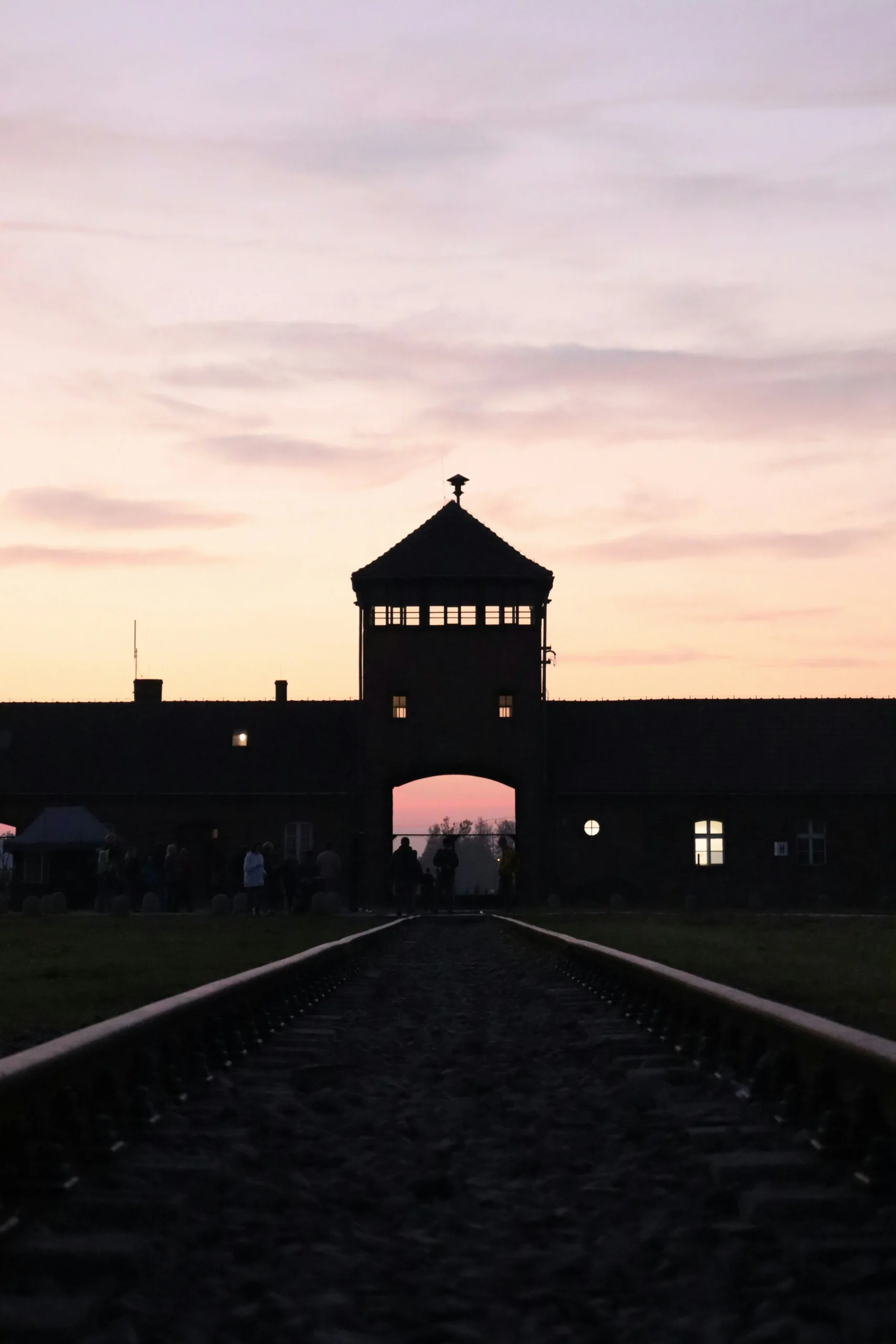
Trips to Poland and Auschwitz with Genealogy Tour
Traveling through Poland to explore family heritage often leads to places marked by both life and loss. For many descendants of Polish families, a visit to Auschwitz is not only a journey into national history but also an encounter with collective memory. Genealogy Tour organizes educational trips that combine archival research, local heritage exploration, and guided visits to Auschwitz-Birkenau — ensuring a historically accurate and deeply respectful experience.
Historical Context of Auschwitz and the Holocaust
Auschwitz-Birkenau, located near the town of Oświęcim in southern Poland, became the largest concentration and extermination camp established by Nazi Germany during World War II. Between 1940 and 1945, it functioned as a central point in the systematic genocide of Jews, Poles, Roma, and other persecuted groups.
The site consists of two main sections: Auschwitz I, the original concentration camp built within former Polish army barracks, and Auschwitz II–Birkenau, an extensive complex designed for mass extermination. Over 1.1 million people were murdered here, primarily Jews deported from across occupied Europe.
Today, the Auschwitz-Birkenau State Museum preserves authentic structures and artifacts as evidence of the atrocities committed. Guided visits conducted by certified historians provide factual explanations, avoiding dramatization and emphasizing historical documentation based on eyewitness accounts, postwar trials, and preserved archives.
Understanding Auschwitz requires situating it within the broader history of occupation and the destruction of European Jewry. For many visitors of Polish descent, this visit also serves to acknowledge the intertwined fates of families who lived in or near these regions before the war.
Combining Family Heritage with Historical Education
Genealogy Tour’s programs integrate visits to Auschwitz with broader heritage itineraries across Poland. Before reaching the memorial site, travelers often explore the regions their ancestors once inhabited — examining parish books, civil registries, and family properties recorded in archival documents.
Such journeys offer a balanced narrative: they illuminate the everyday life of prewar communities while confronting the historical trauma that followed. Many participants discover that their family stories intersect with the Holocaust in direct or indirect ways — through displacement, rescue, or loss.
The transition from genealogical exploration to Auschwitz is handled with care. Guides prepare participants through contextual briefings that explain the chronology of events, the role of occupied Poland in the Nazi system, and the mechanisms of persecution. This approach ensures that each visit is rooted in understanding, not emotion alone.
Visiting Auschwitz-Birkenau Memorial and Museum
The Auschwitz-Birkenau Memorial and Museum stands as one of the most important educational sites in Europe. The preserved barracks, ruins of gas chambers, and exhibitions of personal belongings form a comprehensive documentation of Nazi crimes.
Genealogy Tour cooperates with licensed museum guides to conduct structured visits. Participants learn about camp organization, prisoner life, resistance movements, and liberation by the Red Army in January 1945. Historical explanations rely on authentic documents and survivor testimonies, allowing visitors to engage with primary evidence rather than interpretation.
Photography and behavior on-site are strictly regulated to maintain the dignity of the victims. Guided tours emphasize silent reflection, factual accuracy, and the importance of remembrance. For many families, this visit becomes a moment of connecting private genealogical discovery with the shared history of suffering and resilience.
Other Historical Sites and Family Regions in Southern Poland
Trips to Auschwitz often include surrounding areas that reflect Poland’s complex wartime history. Nearby Kraków, with its preserved Jewish quarter of Kazimierz, offers context for understanding prewar coexistence and cultural life. The Oskar Schindler’s Factory Museum presents personal accounts of rescue and survival.
Further east, Lublin and Majdanek reveal different aspects of occupation, forced labor, and postwar memory. Many travelers also visit ancestral towns in Silesia, Małopolska, or Galicia — regions that hold archives, cemeteries, and churches connected to their family roots.
Exploring these places before or after visiting Auschwitz allows for a more comprehensive understanding of both life before destruction and the long process of rebuilding memory afterward. It situates individual family stories within the broader European narrative of war and remembrance.
Commemoration and the Continuity of Memory
Every trip to Poland that includes Auschwitz is ultimately about remembrance — of both personal and collective pasts. Genealogy Tour’s itineraries encourage reflection through historical learning, not ritualized mourning. Participants often document their findings through photographs, interviews, or family journals that preserve insights for future generations.
The company’s approach rests on three principles: authenticity of sources, respect for victims, and continuity of memory. Each journey helps travelers understand that heritage does not end with archives; it continues in the responsibility to remember truthfully and to protect the historical record.
By integrating family history with Holocaust education, Genealogy Tour transforms travel into a form of cultural preservation — one that honors those who lived, suffered, and survived within the complex history of 20th-century Poland.
Sources:
Auschwitz-Birkenau State Museum
POLIN Museum of the History of Polish Jews
United States Holocaust Memorial Museum
Yad Vashem – The World Holocaust Remembrance Center
Majdanek State Museum
Related Articles
Related
History and Evolution of Slavic Languages
Trace the origins of Slavic languages, from Proto-Indo-European roots to the modern languages spoken across Europe today.
Historical flags of Poland: Colors & symbolism and meaning
From medieval banners to the modern flag: explore the historical flags of Poland and what their colors and symbols represent.
The history and meaning of unique Polish symbols
Discover the history behind Poland’s white eagle, flag, and anthem, and what these national symbols mean. A GenealogyTour guide to Polish heritage.