
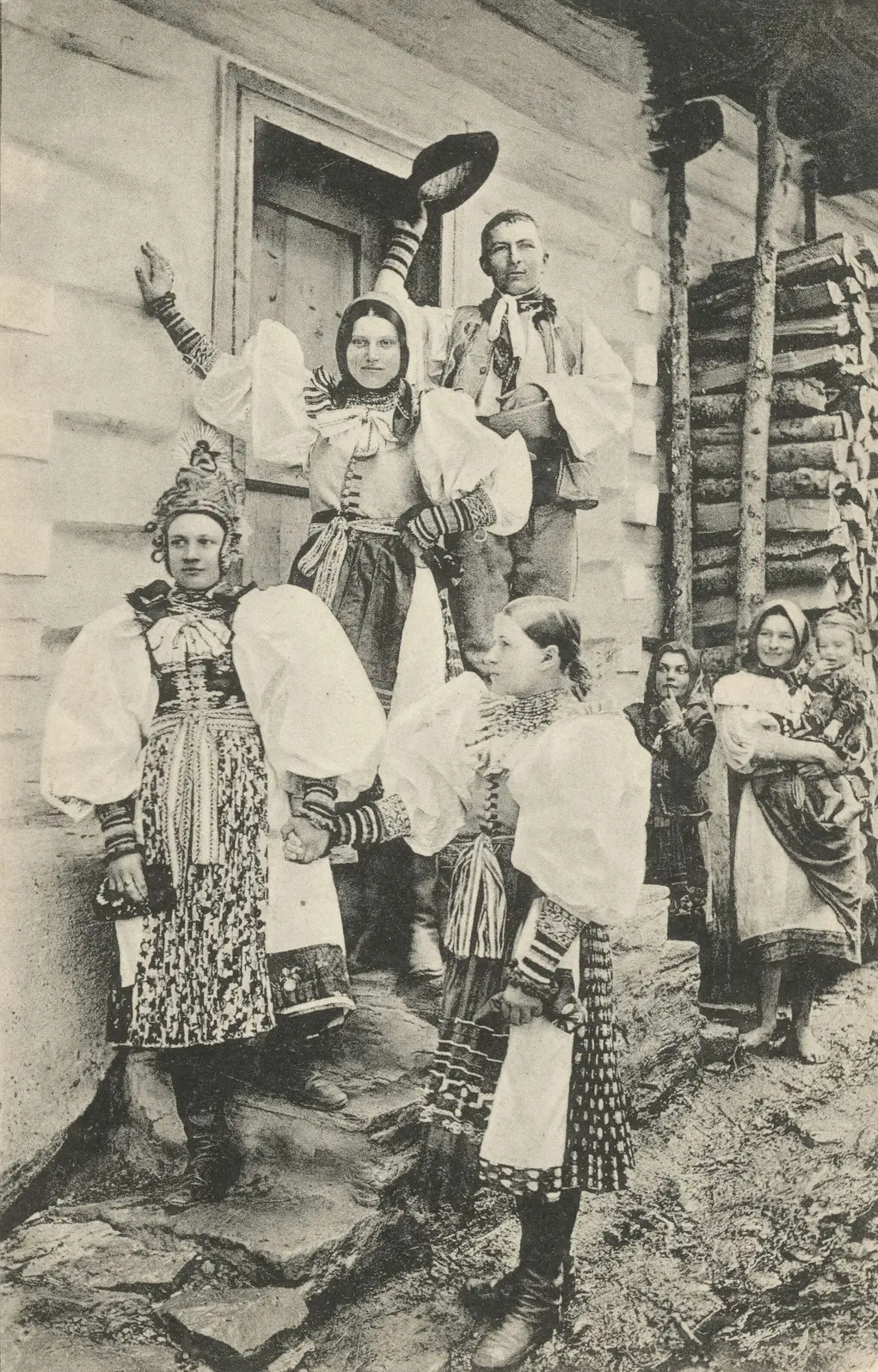
History of Poland in the 19th century
History of Poland in the 19th Century
The 19th century in Polish history began without a Polish state on the map of Europe and ended with the political groundwork for its return. After the final partition in 1795, Polish lands were ruled by three empires, each with its own laws, administration, and policies toward Polish society. Across the century, Poles experienced uprisings, repression, economic change, cultural life under censorship, and large-scale migration. Understanding this period helps explain why family records may appear in different languages, why borders “move” in archives, and why so many Polish descendants trace roots to France, the United States, Brazil, and beyond.
What happened to Poland in the 19th century?
After the partitions, Poland did not exist as an independent country, but Polish political life continued in changing forms. The Napoleonic era briefly created the Duchy of Warsaw (1807–1815), which raised hopes for statehood before the Congress of Vienna reshaped the region again. From 1815, the Russian-controlled Kingdom of Poland (often called “Congress Poland”) was established, while other Polish-inhabited areas remained under Prussian and Habsburg rule. Over time, autonomy in Congress Poland was reduced, especially after failed uprisings, and Russian imperial control intensified.
A helpful way to read the century is as a sequence of political experiments, resistance, and administrative tightening:
- 1795: the Polish–Lithuanian Commonwealth disappears after the third partition
- 1807–1815: Duchy of Warsaw under Napoleon
- 1815: Congress of Vienna creates the Kingdom of Poland under the Russian emperor
- 1830–1831: November Uprising; defeat leads to political exile known as the Great Emigration
- 1863–1864: January Uprising; harsher repression and deeper integration into the Russian Empire
- Late 1800s: industrial growth and mass labor migration reshape Polish society
- 1918: independence is restored after World War I
Three partitions, three administrations
Life in the Polish lands depended heavily on which empire controlled a given region. Borders did not reflect language, local identity, or historical ties. Administration, schooling, military conscription, and courts followed imperial rules, which affected everyday life and the survival of Polish public institutions. This division also explains why genealogical records from the same “Polish” family may be stored in different national archives and written in Polish, Russian, German, or Latin, depending on place and period.
| Partition power | Common regional terms used in sources | Typical record languages (varies by era) |
|---|---|---|
| Russian Empire | Congress Poland; western provinces of the former Commonwealth | Polish and Russian; also Latin in earlier church registers |
| Prussia | Poznań region and other Prussian-held areas | German and Polish; Latin in older parish material |
| Habsburg Monarchy | Galicia (with cities such as Kraków and Lwów/Lviv) | Polish, German, Latin; local practices varied |
Uprisings and repression under imperial rule
Armed resistance shaped political memory across the century. The November Uprising (1830–1831) began in the Kingdom of Poland and ended in defeat. Its aftermath included executions, confiscations, military courts, and the tightening of imperial control. Another major attempt, the January Uprising (1863–1864), unfolded as a broad insurgency and was followed by severe sanctions, including intensified Russification and punishment of communities linked to the rebellion. These events mattered far beyond the battlefield, affecting education, property, and the risk profile of political activity for entire families.
Repression also carried a long administrative shadow. Deportations, prisons, forced relocations, and restrictions on public institutions disrupted lives and created gaps in documentation. For historical research, this is one reason why some family lines appear to vanish in local sources and reappear in distant regions or abroad.
Why did people leave Poland in the late 1800s?
Migration in the 19th century had more than one profile. After 1831, political refugees, soldiers, writers, and activists left for Western Europe in what became known as the Great Emigration, with strong centers in France and Switzerland. Cultural and political institutions created by émigrés helped sustain national life abroad, including museums and collections meant to preserve Polish heritage.
Later in the century, large-scale departures were driven increasingly by economic and social forces associated with industrialization, land pressure in rural areas, and the pull of wages abroad. This movement often involved families and chain migration, with destinations across the Atlantic and within Europe. In practice, leaving Poland could also mean leaving a province of the Russian Empire, Prussia, or Austria-Hungary, which shaped passports, shipping paperwork, and the official labels used in overseas records.
Common late-19th-century drivers found in historical and migration studies include:
-
political repression and fear after failed uprisings
-
limited economic prospects in rural areas and uneven land ownership
-
industrial labor demand in cities and abroad
-
imperial conscription and administrative pressure on minorities and activists
Culture, education, and memory under censorship
Polish cultural life did not disappear, but it functioned under constraints. Education policies differed across empires and periods, and censorship shaped what could be printed or taught. At the same time, informal networks, private initiatives, and émigré communities supported Polish-language culture, historical writing, and national symbols. In many families, identity was transmitted through religion, local traditions, and memory of political events, even when public institutions were restricted.
For family history, this matters in concrete ways: school records, military lists, and civil registers may follow imperial formats, while church registers often preserve continuity across political changes. Understanding the administrative setting of a town or parish in a specific year can save time and reduce errors in interpreting surnames, place names, and the meaning of nationality in documents.
From partitioned provinces to the return of statehood
By the end of the 19th century, Poland’s political landscape was shaped by long-term pressures and new opportunities. Economic modernization and urban growth changed class structure, while mass migration created large diaspora communities. Political thinking also evolved, with competing strategies about how to regain sovereignty and protect society under imperial rule. When World War I destroyed the balance that had sustained the partition system, the conditions emerged for Polish independence to be restored in 1918.
For descendants researching roots today, the century’s central lesson is practical: “Poland” in records may refer to a historical community rather than a state. A single family may appear across Russian, Prussian, or Austrian administrative systems without moving far geographically. That is why serious genealogy often begins with precise locality and date, then matches them to the correct imperial jurisdiction and archive path.
Historical context for family research and heritage travel
The 19th century placed Polish society under three empires, shaped by repeated attempts to regain political agency, and marked by repression, adaptation, cultural persistence, and migration. From the end of statehood in 1795 through uprisings and exile, and onward to the economic migrations of the late 1800s, the period left traces in records, languages, and diaspora communities. For genealogical research and heritage travel, this context helps interpret where documents were created, why families moved, and how identities were recorded across shifting borders.
Sources
Related Articles
Related
History and Evolution of Slavic Languages
Trace the origins of Slavic languages, from Proto-Indo-European roots to the modern languages spoken across Europe today.
Historical flags of Poland: Colors & symbolism and meaning
From medieval banners to the modern flag: explore the historical flags of Poland and what their colors and symbols represent.
The history and meaning of unique Polish symbols
Discover the history behind Poland’s white eagle, flag, and anthem, and what these national symbols mean. A GenealogyTour guide to Polish heritage.