
Origins of concentration camps
The history of concentration camps reaches back decades before the Nazi regime turned them into instruments of mass murder. The first facilities of this kind appeared in the late 19th century, during colonial conflicts in Cuba, South Africa, and the Philippines. Understanding the origins of concentration camps helps place 20th-century tragedies in a wider historical context and explains how the detention of civilians without trial became a tool of state policy. For families researching their ancestors’ fates in wartime Europe, this background is often a starting point for deeper genealogical work.
What a concentration camp actually is?
A concentration camp is a facility where large groups of people are confined by state authority, usually without judicial process, on the basis of ethnicity, religion, or political affiliation. Britannica defines the concentration camp as an internment centre for political prisoners and members of national or minority groups confined for reasons of state security, exploitation, or punishment, usually by executive decree or military order. This distinguishes it from an ordinary prison, where individuals serve sentences after conviction, and from a prisoner-of-war camp, governed by international law. According to the United States Holocaust Memorial Museum, what distinguishes a concentration camp from a prison in the modern sense is that it functions outside of a judicial system — prisoners are not indicted or convicted of any crime through judicial process. This definitional distinction, established in historiography, is fundamental for analyzing events of the 19th and 20th centuries.
Earliest forerunners: 18th and 19th centuries
Forced relocation and mass detention of civilians had appeared in various forms well before the term “concentration camp” entered common usage. Polish historian Władysław Konopczyński suggested that the first such camps were created in Poland in the 18th century, during the Bar Confederation rebellion, when the Russian Empire established three camps for Polish insurgent captives awaiting deportation to Siberia. In North America, a comparable mechanism appeared a few decades later. In 1838 the U.S. Army rounded up members of the Cherokee tribes from the southeastern United States, forcing them into prison camps before relocating them to Oklahoma; many Native Americans died in these so-called “emigration depots” due to the rapid spread of disease in poor sanitary conditions. These events, though not yet described by the later terminology, laid the groundwork for the institutional practice of interning civilians based on identity rather than individual guilt.
Cuba and the birth of the term “reconcentración”
The term itself has a Spanish origin. The term reconcentrados (reconcentration camps) was used for the first time for camps created by the Spanish Army in Cuba during the Ten Years’ War (1868–1878). The method was applied on a broader scale during the next conflict on the island. Spain used concentration camps again in Cuba under Valeriano Weyler’s reconcentration policy during the 1895–1898 Cuban War of Independence, when rural Cubans were relocated to such camps. General Valeriano Weyler, nicknamed “the Butcher,” was sent by Spain to replace Martínez Campos; civilians were forced, on penalty of death, to move into these encampments, and within a year the island held tens of thousands of dead or dying reconcentrados. Historian Andrea Pitzer describes this moment as the birth of the modern concentration camp — a system made possible by new technology: barbed wire and automatic weapons allowed a small guard force to impose mass detention on civilian populations.
South Africa, the Philippines, and Germany’s colonies
The turn of the 20th century brought a rapid spread of the model to other colonial conflicts. During the Second Boer War (1899–1902) in South Africa the British used similar camps as a punitive tool; British command rounded up Boer women and children, as well as other Africans, and interned them in 34 tented camps with poor living conditions and scarce food rations, leading to high death rates. Around the same time, a parallel system emerged on the other side of the Pacific. Camps were established again during the Philippine–American War (1899–1902) . Shortly afterwards, imperial Germany followed. The German Empire also established concentration camps during the Herero and Nama genocide (1904–1907); the death rate of these camps was 45 per cent, twice that of the British camps. These examples show how, within a decade and a half, the camp system became an established tool of colonial administration and military policy.
Early Soviet camps and the Gulag system
After the First World War, the center of practice shifted eastward. In the midst of the Russian Civil War, Lenin and the Bolsheviks established “special” prison camps, separate from the traditional prison system and under the control of the Cheka. In 1929 the distinction between criminal and political prisoners was eliminated, administration of the camps was turned over to the Joint State Political Directorate, and the camps were greatly expanded to the point that they comprised a significant portion of the Soviet economy . The Gulag system consisted of several hundred camps for most of its existence and detained some 18 million people from 1929 until 1953. The Soviet system was historically significant for another reason — it was the first system of mass detention that a government applied on such a scale to its own citizens, on the basis of political, social, or ethnic affiliation.
First Nazi camps: from Dachau to a wider system
The National Socialist authorities drew on these earlier models but developed them in a radically new direction. Nazi officials established the first concentration camp, Dachau, on March 22, 1933, for political prisoners; it was later used as a model for an expanded and centralized concentration camp system managed by the SS. The concentration camp system arose in the following months due to the desire to suppress tens of thousands of Nazi opponents in Germany — the Reichstag fire in February 1933 was the pretext for mass arrests, and the Reichstag Fire Decree eliminated the right to personal freedom enshrined in the Weimar Constitution. About 70 camps were established in 1933, in any convenient structure that could hold prisoners, including vacant factories, prisons, country estates, schools, workhouses, and castles. Between 1933 and 1939 the system was consolidated under SS command and subsequently expanded across German-occupied Europe, forming the administrative foundation for later atrocities.
From concentration camps to extermination centres
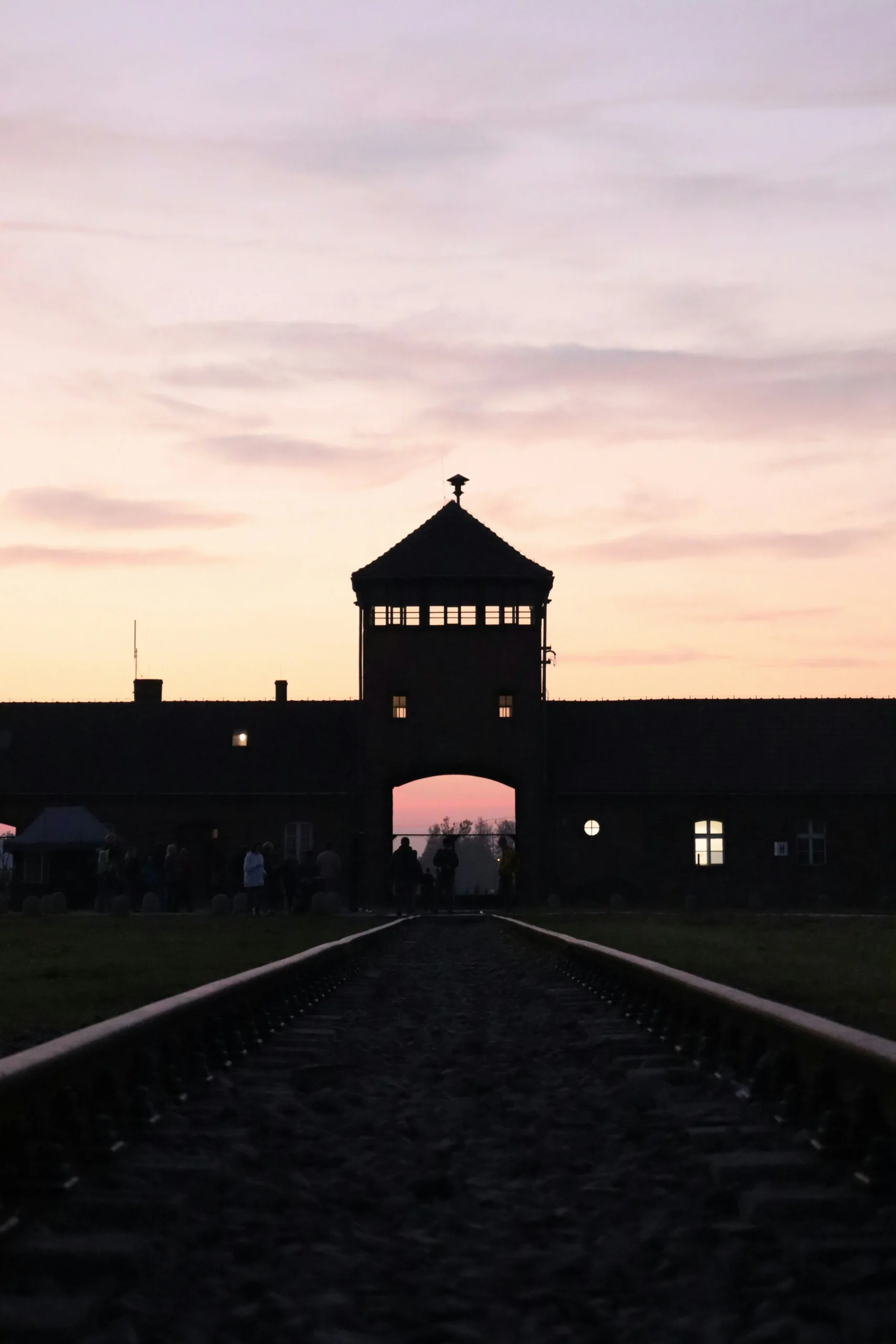
The decisive turning point came with the Second World War and the implementation of the so-called Final Solution. The most shocking extension of this system was the establishment after 1940 of extermination centres, or “death camps”; they were located primarily in Poland, which Adolf Hitler had selected as the setting for his “final solution” to the “Jewish problem.” The most notorious were Auschwitz, Majdanek, and Treblinka. Auschwitz, also known as Oświęcim, was a complex of over 40 concentration and extermination camps operated by Nazi Germany in occupied Poland during World War II and the Holocaust; it consisted of Auschwitz I, the main camp in Oświęcim, Auschwitz II-Birkenau (a concentration and extermination camp with gas chambers), Auschwitz III-Monowitz (a labour camp for the chemical conglomerate IG Farben), and dozens of subcamps. At this point the camp ceased to be solely an instrument of internment — it became, in the case of extermination centres, a place designed to murder entire population groups.
Why the origins of camps matter today?
Knowledge of the origins of concentration camps allows a fuller understanding of 20th-century history and the fates of individuals — victims, survivors, and their families. For people searching for traces of Polish and European ancestors, this context is often the first step toward uncovering family archives, camp records, displacement documents, and post-war registries. At GenealogyTour.com we work with Polish archives, museums, and research institutions to help clients trace ancestors affected by wartime events and reconstruct their stories based on verified source materials. Historical accuracy, shaped by decades of work by historians and memorial institutions, is the foundation of every responsible genealogical investigation.
The concentration camps of the 20th century were not an isolated phenomenon. Their origins reach back to 19th-century colonial conflicts in Cuba, South Africa, and the Philippines, as well as earlier practices of forced civilian relocation. The development of the model, from Spanish reconcentrados and British camps in the Transvaal, through the Soviet Gulag, to Dachau and Auschwitz, shows how the institutional detention of civilians took shape over more than a century. Understanding this history — based on the work of historians such as Andrea Pitzer and the research of institutions including the USHMM, the Leo Baeck Institute, and Encyclopaedia Britannica — is not only a matter of preserving memory but also a prerequisite for responsible genealogical and historical research, and for the work of safeguarding the truth about the fates of millions.
SOURCES:
- Leo Baeck Institute, Concentration Camps Existed Long Before Hitler Came to Power
- A. Pitzer, Concentration Camps Existed Long Before Auschwitz, Smithsonian Magazine
- Encyclopaedia Britannica, Concentration camp
- Encyclopaedia Britannica, Auschwitz
- Encyclopaedia Britannica, Holocaust
- United States Holocaust Memorial Museum, Concentration Camps, 1933–1939
- Concentration camp, Wikipedia
- Nazi concentration camps, Wikipedia
- Auschwitz concentration camp, Wikipedia
Related Articles
Related
History and Evolution of Slavic Languages
Trace the origins of Slavic languages, from Proto-Indo-European roots to the modern languages spoken across Europe today.
Historical flags of Poland: Colors & symbolism and meaning
From medieval banners to the modern flag: explore the historical flags of Poland and what their colors and symbols represent.
The history and meaning of unique Polish symbols
Discover the history behind Poland’s white eagle, flag, and anthem, and what these national symbols mean. A GenealogyTour guide to Polish heritage.