
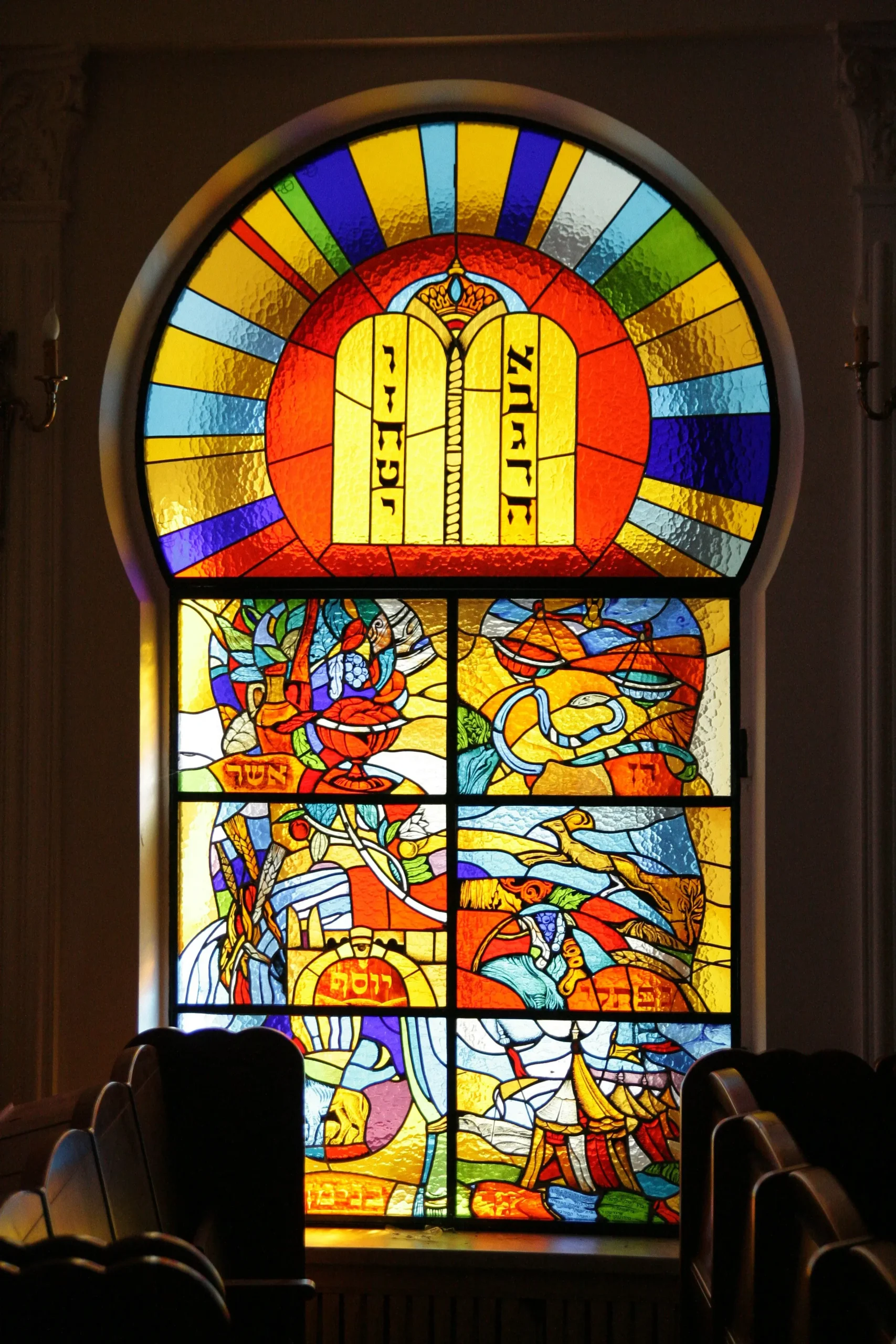
Jewish community in poland today
Poland’s Jewish community today is small compared with the pre war era, yet it remains visible through religious congregations, cultural institutions, social organisations, and the preservation of heritage sites. Any discussion of present day life also needs a clear historical frame: Poland was home to one of the largest Jewish populations in the world before World War II, and the Holocaust destroyed that community. After 1945, emigration and political pressure further reduced numbers, especially after the 1968 anti Zionist campaign described in post war accounts of Jewish life in Poland.
Because identity and affiliation are measured in different ways, sources provide more than one estimate. The Institute for Jewish Policy Research (JPR) publishes a set of definitions that distinguish self identification from ancestry based measures. Using those definitions helps avoid misleading claims and makes discussions comparable across countries.
How many Jews are in Poland today?
JPR lists four population measures for Poland, each answering a different question. The “core” population focuses on people who identify as Jewish and do not identify with another monotheistic religion, while broader measures include people with Jewish parents and household members.
JPR population measures for Poland
| Measure | What it represents (short) | Estimate |
|---|---|---|
| Core Jewish population | self identification plus related criteria used by JPR | 9,600 |
| Population with Jewish parents | includes people with at least one Jewish parent who see themselves as partly Jewish | 14,784 |
| Enlarged Jewish population | adds non Jewish household members connected to the above groups | 19,968 |
| Law of Return population | people with at least one Jewish grandparent plus their immediate families | 25,152 |
A separate summary used by the World Jewish Congress cites an approximate figure of 10,000, attributing that estimate to JPR.
Where do most Jews live in Poland?
Contemporary Jewish life is concentrated mainly in larger cities where institutions, synagogues, and community organisations can operate consistently. The World Jewish Congress notes Warsaw as the primary centre, while also listing communities in Kraków, Łódź, Szczecin, Gdańsk, and cities in Upper and Lower Silesia, including Katowice and Wrocław. It also observes that far fewer Jews live today in several eastern cities that were historically important centres of Jewish communal life.
This pattern is practical rather than symbolic. Larger cities provide access to community services, cultural programming, kosher options, visiting clergy, and educational initiatives. They also support heritage work that reaches beyond the present day population, including the maintenance of cemeteries and former synagogue sites, which are widespread across the country.
Which city in Poland has the most Jews?
Reliable city by city totals are difficult to state because affiliation is not recorded through a single system and because many people with Jewish ancestry do not participate in community structures. Even so, Warsaw is consistently described as the main centre of Jewish life in Poland today. The World Jewish Congress explicitly identifies Warsaw as the primary concentration point.
Warsaw’s role is also reflected in institutional infrastructure. The Jewish Religious Community in Warsaw describes the Nożyk Synagogue as a centre of Jewish social life and a focal point for religious and cultural activity.
Are there still Jews in Kraków?
Yes. Kraków remains one of the most visible centres of Jewish cultural and community life, supported by both formal communal structures and institutions that run social and educational programming. The Jewish Community Centre of Kraków has operated since 2008 and is widely described as a focal point for Jewish life in the city, serving community members and visitors.
Kraków is also important because it connects several layers of history in one place: the historic Jewish district of Kazimierz, post war memory, and contemporary revival initiatives. For visitors, that combination can be educational if approached with care, especially when itineraries include memorial sites that demand time and seriousness.
Why did Poland have so many Jews?
The short historical answer is that Jewish settlement in Polish lands developed over many centuries, and for long periods Poland offered conditions that enabled communal life, scholarship, and economic activity to grow. POLIN Museum frames this as a long history of Jewish presence in Polish lands, beginning in the medieval period and developing across successive political eras.
Over time, Poland became a major centre of Jewish culture and learning. Modern summaries of the long history emphasise that, for centuries, the Polish lands contained one of the largest Jewish communities in the world.
When did Jews start leaving Poland?
Large scale departures occurred in several waves, each tied to specific historical conditions.
After World War II, many survivors left, and the post war period brought further emigration. Later, the events of March 1968 and the state driven anti Zionist campaign marked a major turning point that accelerated departures and weakened communal life in Poland for years. TSKŻ describes 1968 as a serious setback for the Jewish community, linked to mass emigration in the following period.
These departures explain a common genealogical pattern: families with Polish Jewish roots often have records in Poland up to the early or mid twentieth century, then appear in Israel, North America, Western Europe, or Australia in the decades after the war.
Community institutions in Poland today
Present day Jewish life in Poland is supported by a network of organisations with different missions. TSKŻ, founded in 1950, remains a major nationwide social and cultural organisation, operating local branches and supporting community life, cultural programming, and forms of continuity across generations. Alongside that, Jewish religious communities in cities such as Warsaw provide religious services and act as contact points for visitors, education, and cultural initiatives.
In Warsaw, the Nożyk Synagogue is described as a centre for both religious life and broader community activity. The World Jewish Congress also notes a broader ecosystem, including multiple organisations representing different types of Jewish identity, and mentions activity by movements such as Chabad and Reform, which have established communities in Poland in recent decades.
Closing summary
The Jewish community in Poland today is numerically small, but institutionally active in several major cities, with Warsaw most often named as the central hub. Estimates differ by definition, which is why JPR’s population measures are useful for clear discussion. Understanding the present also requires historical precision: the Holocaust and post war emigration reshaped Jewish life in Poland, while contemporary organisations and community centres sustain religious, social, and cultural continuity and support the preservation of heritage sites across the country.
Footnotes
Related Articles
Related
History and Evolution of Slavic Languages
Trace the origins of Slavic languages, from Proto-Indo-European roots to the modern languages spoken across Europe today.
Historical flags of Poland: Colors & symbolism and meaning
From medieval banners to the modern flag: explore the historical flags of Poland and what their colors and symbols represent.
The history and meaning of unique Polish symbols
Discover the history behind Poland’s white eagle, flag, and anthem, and what these national symbols mean. A GenealogyTour guide to Polish heritage.